What's in a name?
How the Red Scare scared the Reds

Have you heard the one about…
…when the Reds weren’t the Reds?
The Cincinnati Reds are not only Baseball’s oldest franchise, they’re also one of the sport’s most storied clubs.
They’ve won five World Series championships and 10 National League pennants. Their record book is overflowing with the feats of legends like Johnny Bench, Pete Rose, Joe Morgan, Tony Perez and Barry Larkin. And the Big Red Machine of the 1970s is one of the game’s all-time greatest teams.
But for six seasons in the 1950s, the Reds weren’t the Reds.
At least not officially.
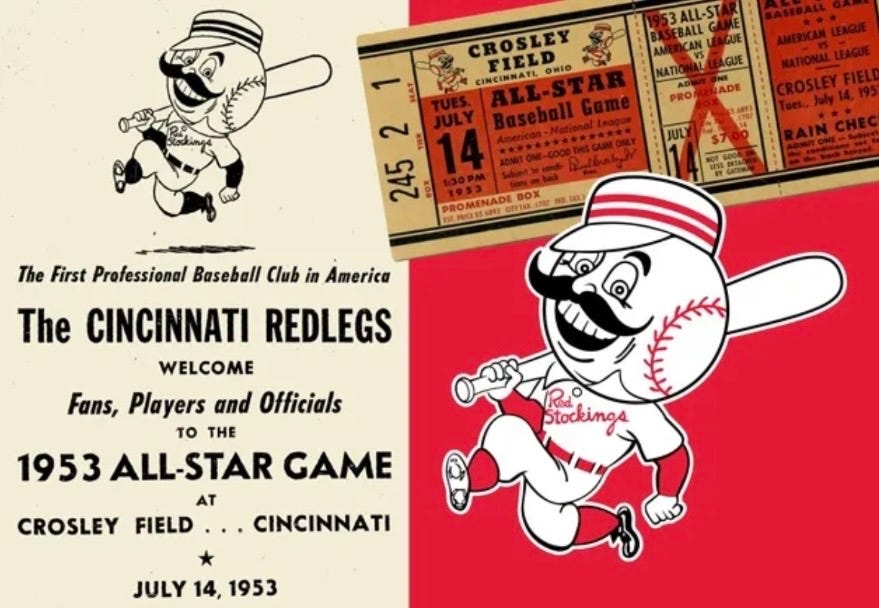
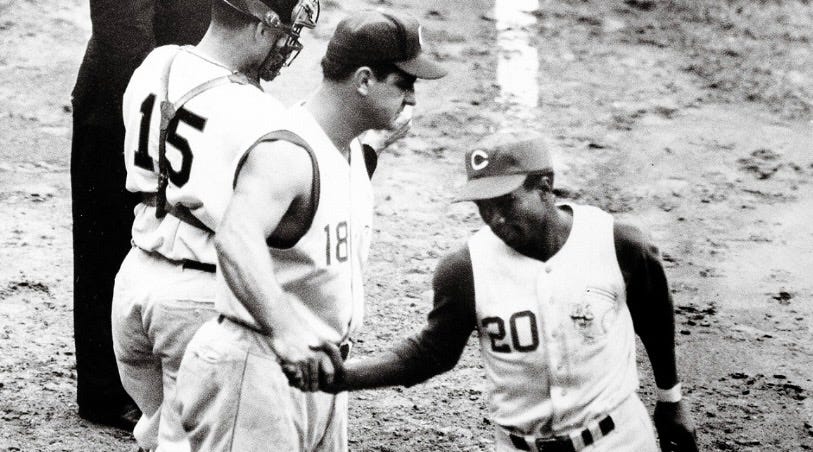
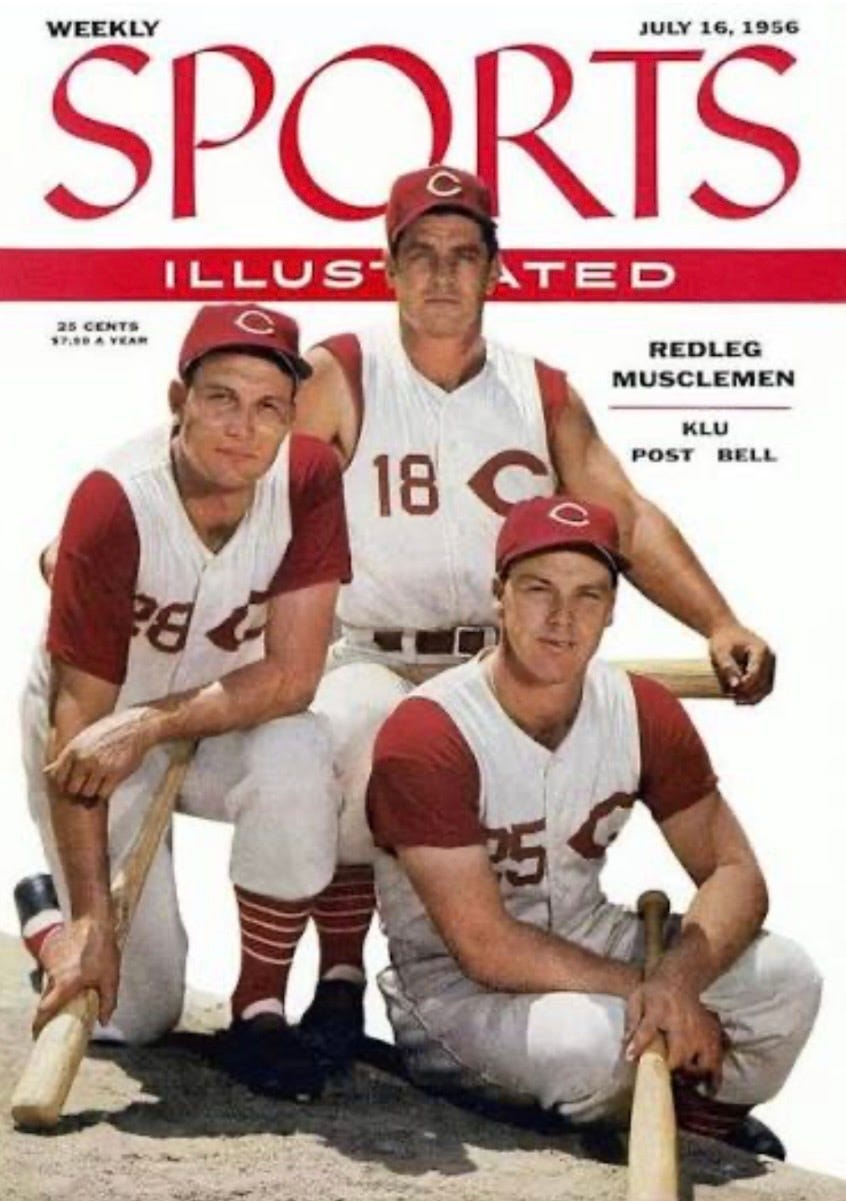
From 1953 through 1958, Cincinnati’s National League club was known as the Redlegs because America had become nervous about the word “Red.”
To understand how that happened, it helps to remember just how different the United States--and the world--felt during the early 1950s.
World War II wasn’t too far in the rear-view mirror. The Soviet Union had detonated its first atomic bomb. The Cold War was intensifying. Americans were worried about communist spies. Politicians warned about communist infiltration. Joseph McCarthy led Senate hearings, investigating suspected communists in government, labor unions and the entertainment industry.
The Red Scare had swept across the nation.
Accusations flew freely. Reputations were damaged. And careers were ruined.
And in the middle of it all was a Major League Baseball team named the Reds.
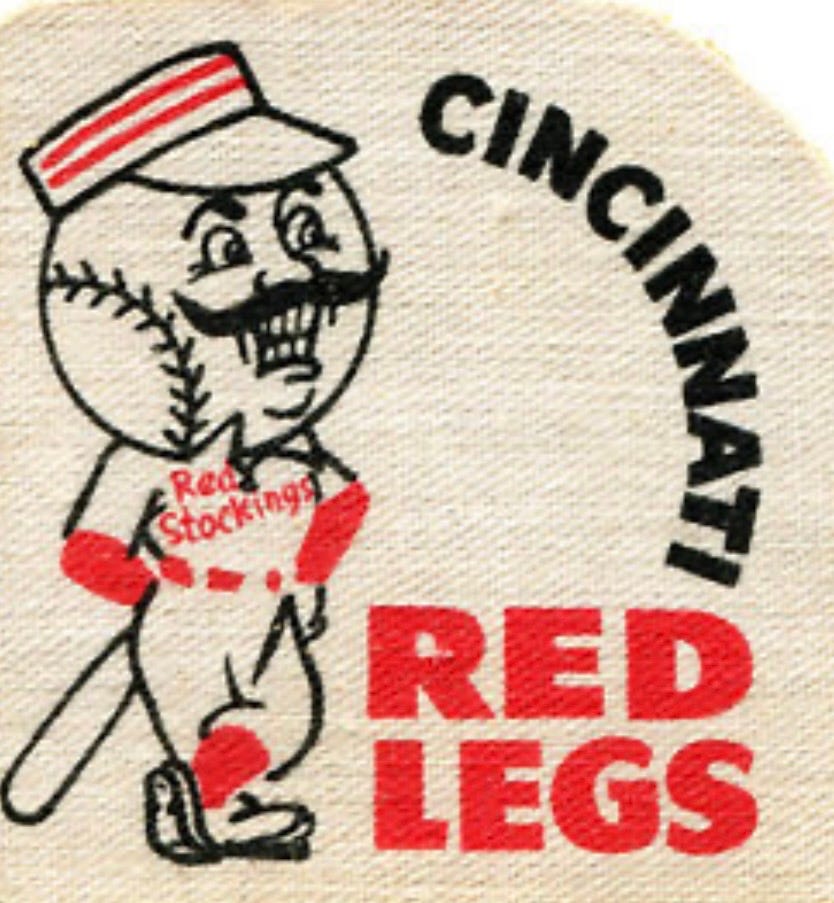
The franchise traced its roots to the Cincinnati Red Stockings, becoming Baseball’s first professional team in 1869. The club’s name referred to the distinctive red stockings worn by its players in the 19th century.
For generations, nobody thought much about it.
But by the early 1950s, the word “Red” had acquired a new meaning in American life. It had become shorthand for communists and communist sympathizers.
Baseball’s Reds had spent decades being associated with Cincinnati. Now some worried they might be associated with Moscow.
That concern reached the front office, and--in 1953--the organization officially adopted the name “Redlegs.”
“We wanted to be certain we weren’t confused with the Russian Reds,” said General Manager Gabe Paul.
Today, that explanation sounds almost comical. At the time, it was all too serious.
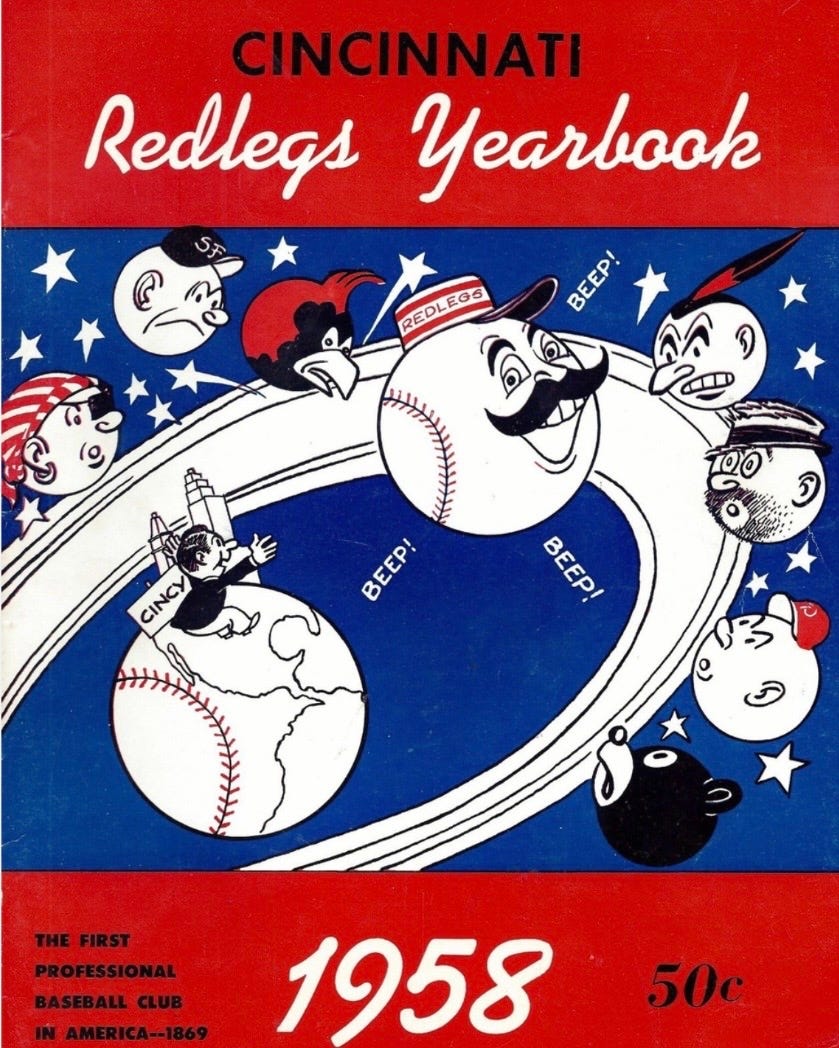
The club began removing references to the Reds from publications and promotional materials. Team stationery changed. Programs changed. Media guides changed. The organization made a genuine effort to become the Cincinnati Redlegs.
The problem was that almost nobody else seemed interested in cooperating.
Fans kept calling them the Reds.
Writers kept calling them the Reds.
Broadcasters kept calling them the Reds.
Even many players continued referring to the club by its traditional nickname.
A franchise can redesign a logo. It can revise a media guide. It can change the wording on official letterhead.
But changing what people actually call a team is much harder. And the Reds learned that lesson the hard way.
The circumstances made the whole episode even more peculiar.
This wasn’t some new franchise searching for an identity. This was Baseball’s oldest organization. The same franchise that had been born as the legendary Red Stockings nearly 100 years earlier. The same franchise that had spent generations building recognition around the name Reds.
Yet for six years, the club found itself caught in an unusual moment when politics, fear and public perception collided with Baseball.
The name change wasn’t driven by a scandal.
Nobody had accused the team of communist sympathies.
Nobody thought the shortstop was secretly sending information to the Kremlin.
Nobody believed the center fielder was plotting a revolution between innings.
The organization was simply trying to avoid even the slightest association with a word that had become politically charged.
Looking back, that’s what makes the story so fascinating.
The Red Scare touched virtually every corner of American life. Government. Education. Entertainment. Labor unions.
And, for a brief period, it touched Baseball.
Finally--by the late 1950s--the political climate began to change. The fever that had fueled much of the anti-communist hysteria started to cool.
And in 1959, the club officially reclaimed its traditional name.
The Redlegs were once again the Reds.
There was no dramatic ceremony. No nationally televised announcement. No elaborate rebranding campaign. Not even a press release.
The organization simply returned to the familiar nickname it had never truly managed to leave behind.
Today, the episode survives as one of the more unusual footnotes in Baseball history.
The Cincinnati Reds have changed managers. Changed owners. Changed ballparks. Changed logos and uniforms.
But the most unusual change involved geopolitics.
For six years, Baseball’s oldest franchise tried to distance itself from a nickname rooted in the 1860s because Americans had become uncomfortable with a word that suddenly meant something entirely different.
The experiment didn’t last.
The Reds nickname did.
The Red Scare eventually faded into history.
And so did the Redlegs.
IF YOU’RE INTERESTED IN LEARNING MORE ABOUT TEAM NICKNAMES…
I wrote about how all 30 current major league clubs got their nicknames in April.

While You’re Here…
Your feedback is always appreciated. Hit the “LIKE” button below if you enjoyed this post and please leave a comment.
Have a topic you’d like to see me write about in future editions of Extra Innings? Tweet me @GlennGeffner and use hashtag #ExtraInnings.
Learn more about one-on-one play-by-play coaching from Glenn Geffner via Zoom at GlennGeffner.com.
If you enjoy baseball stories like this one, you’ve come to the right place.
Extra Innings explores strange, fascinating and often forgotten occurrences from baseball’s past--stories that live beyond the boxscore. With a subscription, new stories will be delivered directly to your email three times each week.
If you’d like to join our Extra Innings community, I hope you’ll consider subscribing. A monthly subscription is only $8. You can purchase an annual subscription that covers the 2026 season and occasional off-season posts for $80.
And if you enjoy our content, please share it with others who share our passion for baseball.