Like mother, like son
The AAGPBL star who raised a big leaguer

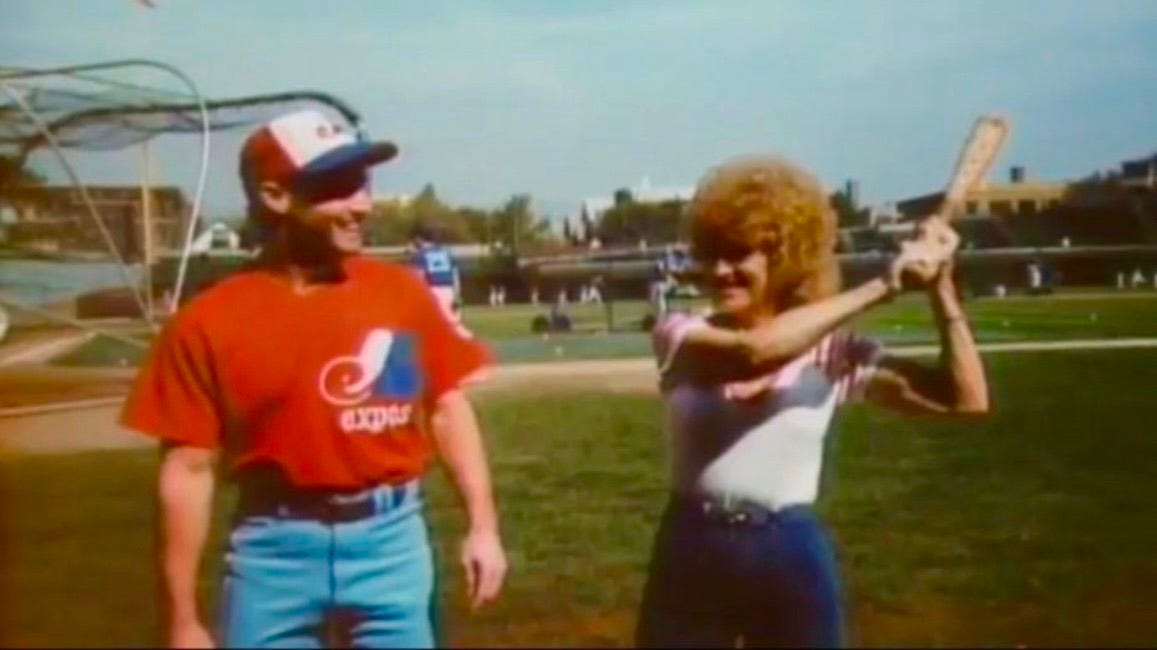
Have you heard the one about…
…the 9-year major league career that was launched by Mom’s backyard lessons?
Yesterday was Mother’s Day.
Which makes today feel like the perfect day to remember Helen Callaghan Candaele--a professional ballplayer, a baseball pioneer and perhaps the only mother in history whose son reached the major leagues after learning the game from a woman once nicknamed “The Feminine Ted Williams.”
The stories Casey Candaele heard growing up didn’t sound much like the stories other kids heard from their mothers in the 1960s.
His Mom talked about ballparks and buses. About stealing bases and throwing runners out from left field. About playing professional baseball during World War II. About teammates with nicknames and personalities and stories that sounded almost too colorful to be real.
And Casey’s Mom wasn’t the only one.
His aunt had played too.
Long before Casey Candaele reached the major leagues himself--playing 9 seasons and more than 750 games for the Expos, Astros and Indians between 1986 and 1997 before later managing in the minors--the game already played a prominent role inside his family. It lived in stories around the house. It lived in backyard catch sessions. It lived in the athleticism of a woman named Helen Callaghan Candaele--one of the stars of the All-American Girls Professional Baseball League.
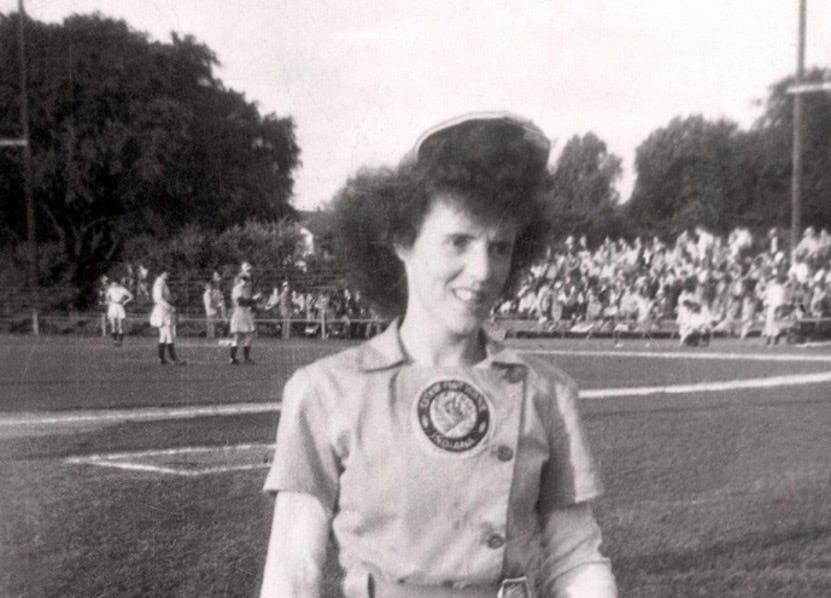
Last week, we explored the larger story of the AAGPBL and the women whose lives inspired A League of Their Own. But the more you dig into the history of that league, the more you realize some of the best baseball stories don’t end when the league folded in 1954.
Sometimes they echo across generations.
Sometimes they produce a major leaguer.
Helen Callaghan grew up in Vancouver, British Columbia and became one of the best softball players in western Canada. In 1943, she and her older sister Marge traveled to Detroit to represent Canada at the World Softball Championship. There, they were spotted by a scout working for Branch Rickey--who had just guided the St. Louis Cardinals to a World Series title in 1942 before moving to the Brooklyn Dodgers in ‘43 as president and general manager.
Soon, both sisters were headed south to join the new women’s professional league.
They became the first sisters in league history.
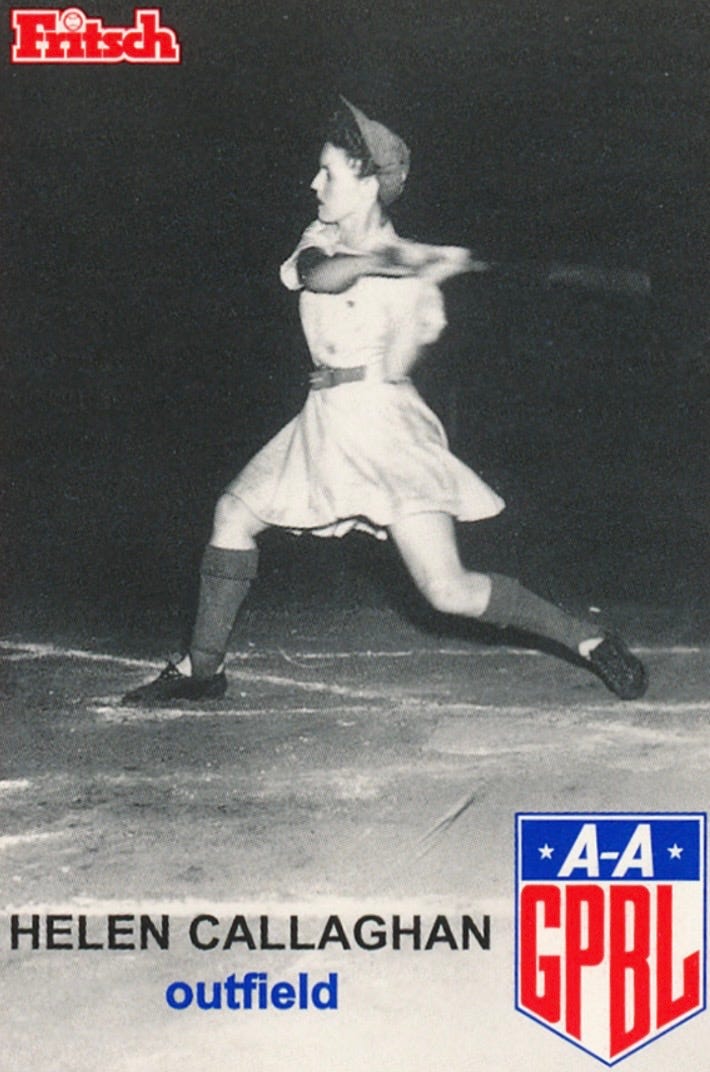
Helen was a left-handed hitting outfielder with blazing speed and a powerful throwing arm, playing for the Minneapolis Millerettes, who in 1945 moved and became the Fort Wayne Daisies. Marge, a third baseman, stayed in the league even longer than her sister. Together, the Callaghan sisters helped carve out a place in a sport and a culture that still largely viewed women athletes as novelties rather than serious competitors.
Helen, nicknamed “Cally,” became one of the league’s stars.
In 1945, she won the batting title, hitting .101 points above the league average. That season she tied for the league lead in home runs, led the league in hits, doubles and total bases, and ranked 2nd with 92 steals and 77 runs scored.
She was dubbed “The Feminine Ted Williams.”
She possessed game-changing speed. After stealing 92 bases in 1945 and 114 the following season, she finished her career with 419 steals in 495 games.
And, according to family stories, she once grabbed the biggest bat on the team and launched a pair of home runs with it.
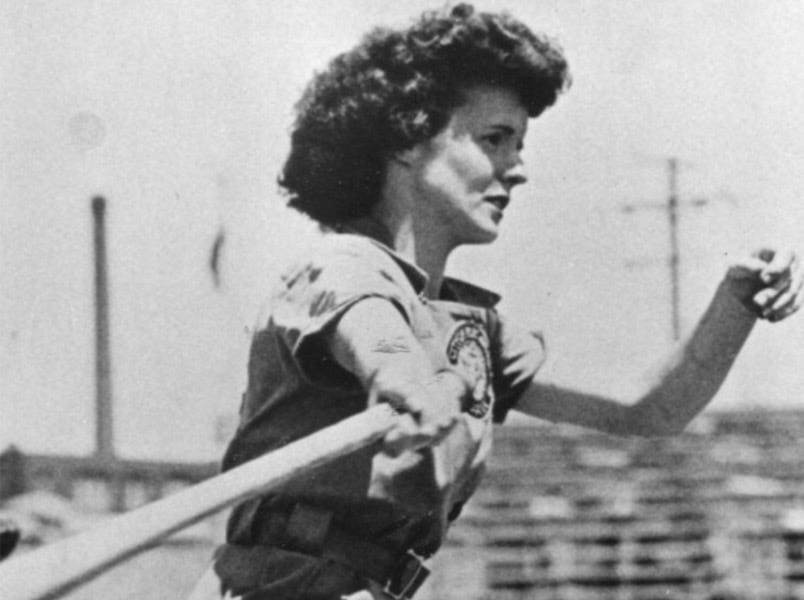
After missing the 1947 season due to illness, she came back in 1948 after getting married and having her first child. She concluded her career with the Kenosha Comets in 1949, ranking among league leaders in batting, doubles, triples, steals and total bases.
Those stories became part of the soundtrack of Casey Candaele’s childhood.
At first, though, Casey’s and his older brother Kelly didn’t fully understand just how extraordinary their mother really was.
“She would hit me ground balls, play catch and throw me batting practice,” Casey said. “I thought that everybody’s Mom was doing that.”
Then came the powder puff game.
Years later, Kelly recalled a Little League event where mothers were invited onto the field for a fun exhibition game while the dads and kids laughed from the stands. Except Helen came to play.
“My mother just clearly demonstrated athletic ability that was beyond most of the men who were laughing at the women ‘throwing like girls,’” Kelly later told MLB.com. “That’s when I realized that when she talked about playing professional baseball, she really meant at a high level.”
That realization changed everything.
Suddenly, the stories were more than family folklore. They came alive.
And the baseball bloodlines in that family ran deep.
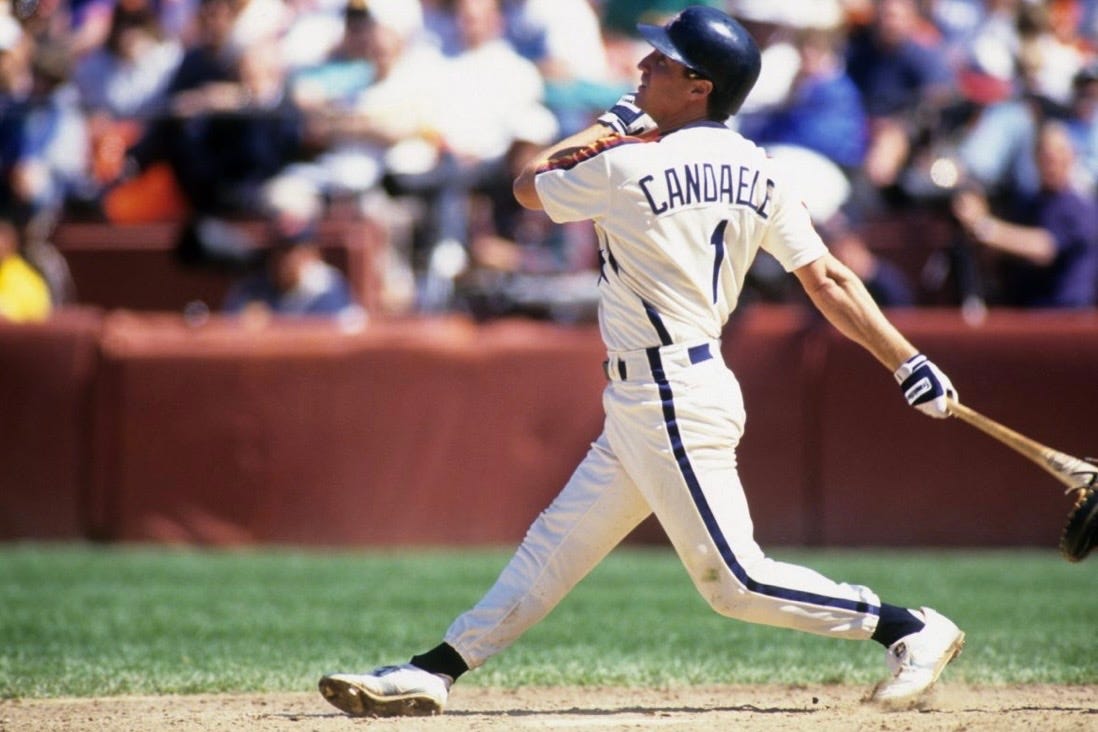
Casey eventually reached the major leagues as one of baseball’s most versatile utility players. He played everywhere, at one time or another appearing in a big league game at every position except pitcher and catcher. Wherever teams needed him. He later became a longtime manager in the minors.
But even after reaching the major leagues himself, Casey always understood where his baseball foundation came from.
His Mom.
“My Mom taught me that you can never have a bad day hustling,” Casey said. “So run balls out. Play the game hard.”
That relationship became even more meaningful because of another unlikely twist in baseball history.
Casey’s brother Kelly helped make A League of Their Own possible.
In the 1980s, Kelly Candaele and filmmaker Kim Wilson set out to create a documentary about the forgotten women of the AAGPBL. At the time, few Americans knew the league had even once existed. Former players still had film reels and photographs sitting in garages and basements. Kelly and Wilson tracked down old footage, interviewed former players and assembled a documentary for PBS titled A League of Their Own.
That documentary eventually landed in front of director Penny Marshall.
And from there, everything changed.
Kelly later explained that one of the central emotional ideas he pitched for the movie involved two sisters whose love for one another remained intact despite rivalry, conflict and different life paths. Sound familiar? It was rooted directly in Helen and Marge.
A League of Their Own became the highest-grossing baseball movie ever at the time and remains one of the most beloved sports films in history.
But the most touching part of the story may have happened away from Hollywood.
Helen lived long enough to see it all happen.
She appeared on The Today Show. She appeared on The Arsenio Hall Show. People Magazine profiled her. Her son later joked that she became more famous in her late 60s than she had been during her actual playing career.
And she loved how accurately the movie captured the spirit of the league.
The charm school scenes. The buses. The uniforms. The humor. The baseball details. The personalities.
The women themselves.
Tragically, Helen died of breast cancer in December 1992--just 5 months after A League of Their Own premiered in theaters. But she lived long enough to see the women of the AAGPBL finally receive the recognition they had deserved for decades.
In 1998, the Canadian Baseball Hall of Fame inducted the Callaghan sisters and 66 other Canadian women who played in the AAGPBL as a group. In 2021, Helen Callaghan was inducted individually, the first woman to receive that honor.
“These women were characters,” Kelly said. “They were gregarious, and loved the game, and were thoughtful and knew about baseball, loved talking about it.”
That may be the most important part of this whole story.
For decades, too many people treated the women of the AAGPBL like a novelty act tucked away in the margins of baseball history. But when you actually listen to the stories--when you hear about Helen and Marge and the lives they lived--you realize these women weren’t baseball curiosities.
They were ballplayers.
Real ones.
Competitive. Skilled. Funny. Tough. Fast. Ambitious.
And in Helen’s case, talented enough to help raise a future major leaguer who learned the game from watching his mother throw a baseball.
That feels unusual today. Imagine how it felt in 1965.
There’s another beautiful detail buried inside this story too. After A League of Their Own became a cultural phenomenon, young girls who had never heard of the AAGPBL suddenly could see themselves in sports differently. Kelly later said parents intentionally showed the movie to daughters who played softball, baseball or soccer because the story resonated so deeply.
That matters.
Because baseball history isn’t only passed down through fathers and sons.
Sometimes it’s passed down through mothers who stole 419 bases and won a batting title.
Sometimes it’s passed down through sisters from Vancouver who changed baseball history without realizing it at the time.
And sometimes the little boy listening to those stories in the backyard grows up to reach the major leagues himself. A great legacy. On Mother’s Day or any day.
While You’re Here…
Your feedback is always appreciated. Hit the “LIKE” button below if you enjoyed this post and please leave a comment.
Have a topic you’d like to see me write about in future editions of Extra Innings? Tweet me @GlennGeffner and use hashtag #ExtraInnings.
Learn more about one-on-one play-by-play coaching from Glenn Geffner via Zoom at GlennGeffner.com.
If you enjoy baseball stories like this one, there are plenty more to come.
Extra Innings explores strange, fascinating and often forgotten occurrences from baseball’s past--stories that live beyond the boxscore. With a subscription, new stories will be delivered directly to your email three times each week, with one free post every Monday (at least to get started) and subscriber-only stories every Wednesday and Friday.
If you’d like to join our Extra Innings community, I hope you’ll consider subscribing. A monthly subscription is only $8. You can purchase an annual subscription that covers the 2026 season and occasional off-season posts for $80.
And if you enjoy our content, please share it with others who share our passion for baseball.