
Food for thought
The history of ballpark eats

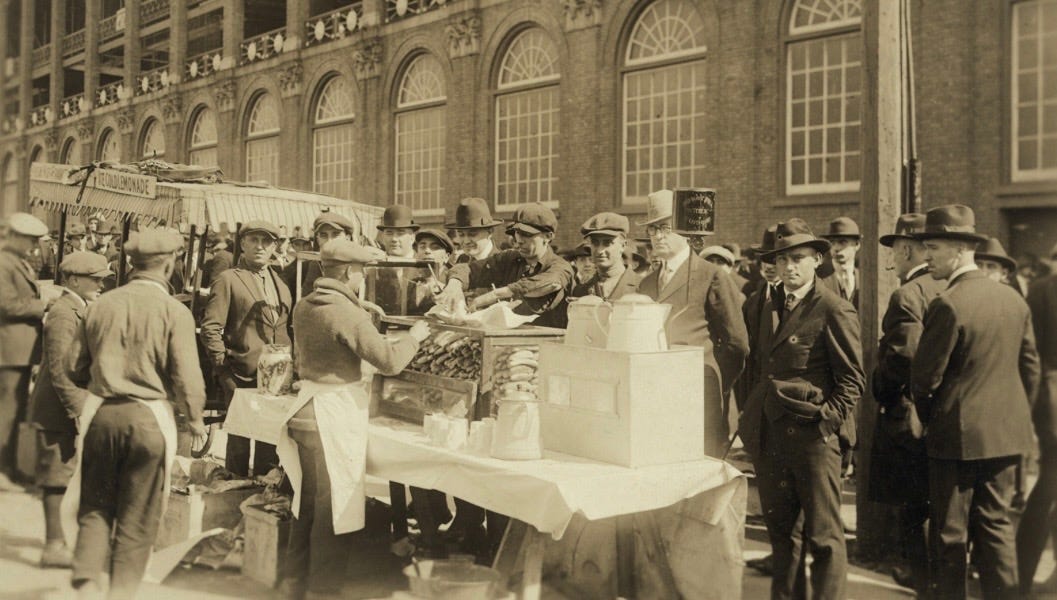
Have you heard the one about…
…how ballpark concessions became a major league business?
“A hot dog at the ballpark is better than any steak at the Ritz.”
—Humphrey Bogart
Long before 2026, ballpark fare such as 128-ounce nacho buckets, brisket donuts, watermelon habanero margaritas, fried chicken ice cream and 9-hot dog/9-beer/9-inning challenges, the only item on the menu at most ballparks was served up between the foul lines.
You bought a ticket to watch baseball, and you…watched baseball.
In the game’s earliest days—in the 19th and early 20th centuries—ballpark food was only occasionally available. But even when it was, it was as simple and improvisational as the early game itself. Locals showed up to sell whatever they could carry. Sandwiches, ice cream, apples, peanuts—hand-held items that didn’t require much more than a hungry customer with a few coins to spare.
The efforts of these vendors were informal. They were unregulated. And in some cases, they were not entirely welcome.
Early team owners weren’t enamored with the idea of independent vendors profiting inside their ballparks. But fans kept buying what they were offering. And when there’s demand, someone’s going to figure out how to meet it.
In the early 1900s, teams came to understand food could be more than a mere side business. It could become part of the ballpark experience. If people were going to spend 2 or 3 hours watching a ballgame, owners began to figure they were going to want to eat as well.
And if they were going to eat, why shouldn’t the ballclub profit?
That’s when concessions began to move from wandering vendors to fixed stands—primitive by today’s standards, but a major step forward. And with that shift came some ballpark culinary traditions.
